
Cancer Blood Tests: A Clear Guide for Dubai Patients
Cancer Blood Tests in Dubai | Common Tests Explained by DIO Life
If you worry about cancer or care for someone who does, blood tests can help. They do not always prove cancer. Still, they give doctors useful clues. This guide lists common tests, what they check, and when they are used. It also shows how DIO Life Home Health Care in Dubai supports at‑home testing.
Why blood tests matter
Blood tests can find signs that suggest cancer, show how organs work, and help track treatment. For some cancers, they guide the need for scans or a biopsy. For blood cancers, some tests can give a direct clue.
Tumor markers (protein tests) — what they are and what they suggest
- PSA — Prostate‑Specific Antigen. Used to check prostate health. High levels can mean prostate cancer or benign prostate conditions.
- CEA — Carcinoembryonic Often used for colon cancer follow up. Can rise with other
cancers and some non‑cancer conditions.
- CA 19‑9 — Pancreatic and bile duct It can also be raised with pancreatitis or bile duct
blockage.
- CA‑125 — Often used for ovarian cancer Levels can rise with other conditions like
endometriosis.
- AFP — Alpha‑Fetoprotein. Used for liver cancer and some germ cell
- HCG — Human Chorionic Used for some testicular cancers and germ cell tumours.
- Calcitonin — Marker for medullary thyroid
- Thyroglobulin — Used to monitor some thyroid cancers after
- PAP — Prostatic Acid Older prostate marker that still has role in some cases.
- NSE — Neuron‑Specific Can rise in small cell lung cancer and some neuroendocrine
tumours.
- Chromogranin A — Used for neuroendocrine
- S‑100 Protein — Linked to melanoma in some
- HER2 — A protein measured in breast cancer to guide therapy (usually from tissue, sometimes in
blood tests).
- ER / PR — Estrogen and progesterone Used in breast cancer care (mostly tissue tests).
Blood counts and blood cancers
CBC (Complete Blood Count) — checks red cells, white cells, and platelets. It can show signs of leukemia or lymphoma when counts are too high or too low.
Genetic and molecular tests (blood)
- BRCA1 / BRCA2 — Gene tests that show inherited risk for breast and ovarian These are blood or saliva tests.
- Microsatellite Instability (MSI) — Shows DNA repair issues in It helps guide treatment for some cancers.
- Circulating Tumour DNA (ctDNA) — Fragments of tumor DNA in Used for monitoring, detecting recurrence, or finding mutations.
- Circulating Tumour Cells (CTCs) — Whole cancer cells found in May show spread in some solid tumours.
Hormone-related and neuroendocrine tests
- TSH, T3, T4 — Thyroid hormones. Abnormal results can suggest thyroid disease. Some thyroid cancers affect these levels.
- ACTH and cortisol — Check for adrenal gland Tumours of adrenal glands can change
these levels.
- 5‑HIAA — A urine test used for some carcinoid (neuroendocrine)
Organ function and general markers (indirect signs)
- Liver Function Tests (LFTs) — ALT, AST, bilirubin. High values can suggest liver involvement or
- Kidney tests — Creatinine and BUN check kidney Important before some cancer drugs.
- LDH (Lactate Dehydrogenase) — A general marker that can rise with many cancers and tissue
damage.
- Calcium levels — High calcium can occur with bone metastases or multiple
High or low values in these tests do not prove cancer. They point to problems that need more checks.
Other blood chemistry tests of note
- Calcium — High in bone metastasis and multiple
- Glucose — May be checked in pancreatic disease work
Quick reference table: test, what it checks, common cancers (short)
| Test | Checks | Common cancers |
| PSA | Prostate antigen level | Prostate |
| CEA | Tumour protein marker | Colon, lung, breast |
| CA 19‑9 | Pancreatic marker | Pancreas, bile duct |
| CA‑125 | Ovarian marker | Ovary, some uterine |
| AFP | Liver germ cell marker | Liver, germ cell tumours |
| HCG | Germ cell marker | Testicular/germ cell |
| Calcitonin | Thyroid cell product | Medullary thyroid |
| Thyroglobulin | Thyroid antigen | Thyroid (monitoring) |
| PAP | Prostate enzyme | Prostate (older marker) |
| NSE | Neuron enzyme | Small cell lung, neuroendocrine |
| Chromogranin A | Neuroendocrine marker | Neuroendocrine tumours |
| S‑100 | Melanoma protein | Melanoma |
| HER2 | Breast growth protein | Breast (therapy guide) |
| ER/PR | Hormone receptors | Breast (therapy guide) |
| Test | Checks | Common cancers |
| CBC | Blood cell counts | Leukemia, lymphoma |
| ctDNA | Tumour DNA fragments | Various (monitoring, recurrence) |
| CTCs | Tumour cells in blood | Various solid tumours |
| BRCA1/BRCA2 | Inherited gene risk | Breast, ovarian, pancreatic (risk) |
| MSI | DNA repair status | Colorectal, others |
| LDH | General cell damage | Many cancers |
| LFTs | Liver enzymes | Liver, metastasis |
| Creatinine/BUN | Kidney function | Kidney involvement |
| Calcium | Serum calcium | Multiple myeloma, bone mets |
| 5‑HIAA | Serotonin breakdown product | Carcinoid (neuroendocrine) |
When to test and what abnormal results mean
A doctor may order these tests when you have symptoms, a lump, weight loss, unexplained pain, or when monitoring known cancer. Abnormal results usually lead to imaging or biopsy. One test alone rarely gives a final answer.
Limitations of blood tests for cancer
- Not all cancers release markers into
- Some markers rise in non‑cancer conditions (inflammation, infection).
- Low sensitivity for early stage disease for many
- Tissue biopsy remains the gold standard for
How DIO Life Home Health Care in Dubai can help
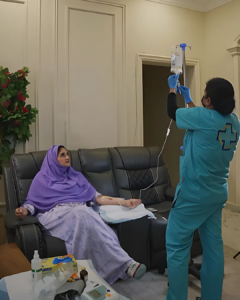
DIO Life offers at‑home blood sample collection across Dubai. A trained phlebotomist comes to your home to collect samples safely. Tests are sent to certified labs. Results are shared with you and your doctor. This reduces travel and wait time.
- Book an at‑home test through DIO Life for patient comfort and
- Choose tests your doctor asks
- Get follow up guidance on abnormal results from DIO Life care
Frequently Asked Questions About Cancer Blood Tests
Can a blood test detect cancer?
Blood tests can help detect signs that may suggest cancer, but they usually cannot confirm cancer on their own. Tests such as PSA, CEA, CA 19-9, CA-125, AFP, and CBC can identify abnormalities that may require further investigation. In most cases, imaging scans and a biopsy are needed to confirm a cancer diagnosis.
What are the most common blood tests used for cancer screening?
Common cancer-related blood tests include PSA for prostate cancer, CA-125 for ovarian cancer, CA 19-9 for pancreatic cancer, CEA for colorectal cancer monitoring, AFP for liver cancer, and CBC for blood cancers such as leukemia and lymphoma. Doctors may also recommend genetic tests like BRCA1 and BRCA2 based on family history and risk factors.
Can I get cancer blood tests done at home in Dubai?
Yes. DIO Life Home Health Care offers at-home blood sample collection across Dubai. A qualified phlebotomist visits your home, collects the required samples safely, and sends them to certified laboratories for analysis. Results are then shared with you and your physician for further evaluation.
What does it mean if a cancer marker blood test is high?
A high tumor marker level does not automatically mean you have cancer. Many markers can increase due to non-cancerous conditions such as infections, inflammation, liver disease, endometriosis, or benign prostate enlargement. Your doctor will interpret the results alongside your symptoms, medical history, imaging studies, and other diagnostic tests.
Which blood tests can help detect blood cancers like leukemia and lymphoma?
The Complete Blood Count (CBC) is one of the most important tests for detecting possible blood cancers. It measures red blood cells, white blood cells, and platelets. Abnormal blood cell counts may indicate leukemia, lymphoma, or other blood disorders. Additional tests, including flow cytometry, genetic testing, and bone marrow examination, may be required for diagnosis.
Are cancer blood tests accurate for early detection?
Cancer blood tests can provide valuable early clues, but their accuracy varies depending on the type and stage of cancer. Some cancers do not produce detectable blood markers in the early stages. For this reason, blood tests are often used together with imaging scans, physical examinations, and biopsies to achieve an accurate diagnosis.