Pregnancy Care in Dubai: Essential Hormone Tests During Pregnancy
Pregnancy brings many changes to your body. Hormone levels shift to support your baby’s growth. Tracking these changes through proper testing helps you and your doctor stay on top of your health.
If you live in Dubai, you now have access to pregnancy hormone tests at home. This makes prenatal care easier and more private. No long waits at clinics. No traffic. Just expert care at your doorstep.
In this guide, you will learn:
- Which hormone tests you need during pregnancy
- When to take these tests
- What the results mean
- How to get tested at home in Dubai
Why Hormone Tests Matter During Pregnancy
Your body produces many hormones during pregnancy. These hormones help your baby grow and prepare your body for birth. When levels are off, problems can occur.
Hormone tests help your doctor:
- Confirm pregnancy early
- Check if the baby is growing well
- Spot potential issues like thyroid problems or gestational diabetes
- Screen for genetic conditions
Early detection leads to better care. That is why doctors recommend regular testing throughout your pregnancy.
Key Hormone Tests During Pregnancy
Here are the most important hormone tests you need during each stage of pregnancy.
hCG (Human Chorionic Gonadotropin)
This is the first hormone to rise after conception. The placenta makes hCG soon after the embryo implants in your uterus.
What it does: hCG tells your body to keep making progesterone. This supports the pregnancy in early weeks.
When to test: As early as 7 to 10 days after conception. Levels double every 48 to 72 hours in early pregnancy.
What results tell you:
| hCG Level | What It Means |
| Under 5 mIU/mL | Not pregnant |
| 5 to 50 mIU/mL at 3 weeks | Early pregnancy |
| 5 to 426 mIU/mL at 4 weeks | Normal pregnancy |
| 18 to 7,340 mIU/mL at 5 weeks | Normal pregnancy |
| 1,080 to 56,500 mIU/mL at 6 weeks | Normal pregnancy |
Low or slow-rising hCG may point to an ectopic pregnancy or early miscarriage. Very high levels may suggest twins or a molar pregnancy.
Progesterone
This hormone prepares the uterine lining for the baby. It keeps the pregnancy stable.
What it does: Stops early contractions. Supports the placenta. Helps the immune system accept the baby.
When to test: Often tested alongside hCG in early pregnancy. Also checked if you have spotting or a history of miscarriage.
What results tell you: Low progesterone may raise the risk of miscarriage. Your doctor may prescribe supplements if levels are low.
Estrogen (Estradiol)
Estrogen levels rise steadily during pregnancy. This hormone helps the baby’s organs develop.
What it does: Helps the uterus grow. Improves blood flow to the baby. Prepares breast tissue for milk production.
When to test: Part of the quad screen in the second trimester (between 15 and 20 weeks).
TSH and Thyroid Hormones
Thyroid health is vital for your baby’s brain development. Pregnancy puts extra stress on your thyroid.
What it does: Thyroid hormones control metabolism and support fetal brain growth.
When to test: At your first prenatal visit. Then repeated if you have a history of thyroid issues.
What results tell you:
- High TSH: Your thyroid is underactive. This can affect the baby’s development.
- Low TSH: Your thyroid is overactive. This can lead to complications.
Proper treatment keeps your thyroid in range and your baby healthy.
NIPT (Non-Invasive Prenatal Testing)
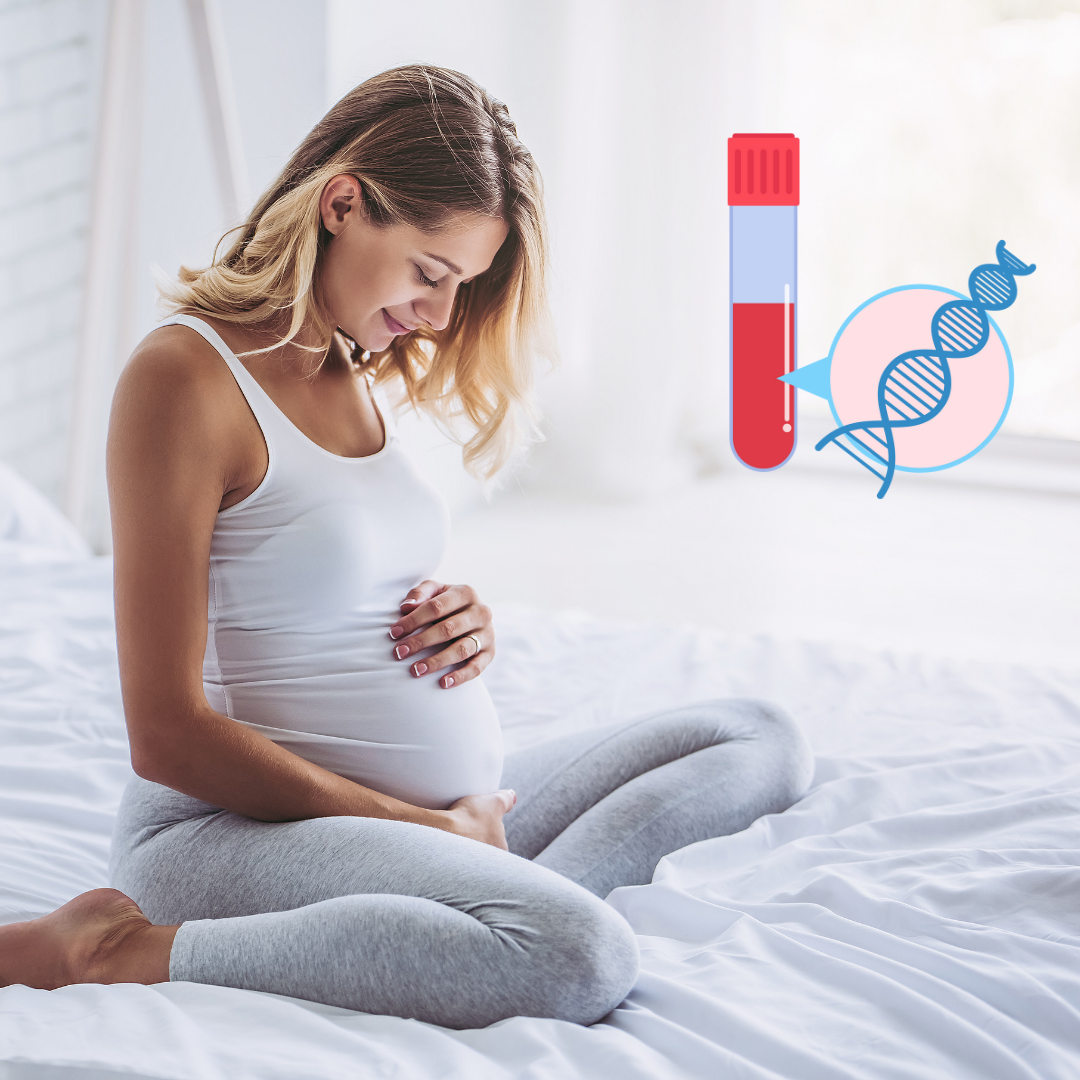
NIPT is a blood test that screens for genetic conditions. It looks at cell-free fetal DNA in your blood.
What it screens for:
- Down syndrome (Trisomy 21) – over 99% accuracy
- Edwards syndrome (Trisomy 18) – 97 to 99% accuracy
- Patau syndrome (Trisomy 13) – 95 to 99% accuracy
- Sex chromosome conditions
- Microdeletion syndromes
When to test: Starting at 10 weeks of pregnancy. The ideal window is 10 to 13 weeks.
Why choose NIPT: It is safe. No risk to you or the baby. No risk of miscarriage. Results come in 5 to 10 days.
Other Important Tests
Your doctor may also order:
- Glucose tolerance test: Screens for gestational diabetes. Done around 24 to 28 weeks.
- Quad screen: Checks for neural tube defects. Done in the second trimester.
- Group B strep test: Done at 35 to 37 weeks.
When Should You Get These Tests?
Here is a simple timeline of hormone tests during pregnancy in Dubai:
First Trimester (Weeks 0 to 13)
- hCG test (as early as 10 days after conception)
- Progesterone test (if needed)
- TSH / thyroid panel
- NIPT screening (from week 10)
- First trimester screening (PAPP-A and free beta hCG)
Second Trimester (Weeks 14 to 27)
- Quad screen (estrogen, hCG, AFP, inhibin A)
- Glucose tolerance test (weeks 24 to 28)
- Follow-up thyroid tests (if needed)
Third Trimester (Weeks 28 to 40)
- Glucose testing (if not done earlier)
- Repeat thyroid tests (if needed)
- Group B strep test (weeks 35 to 37)
At-Home Hormone Testing in Dubai
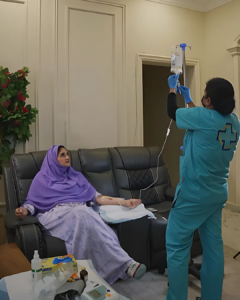
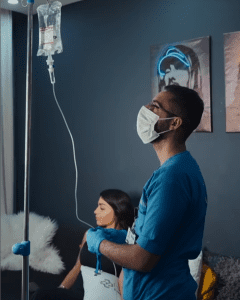
Many women in Dubai now choose home testing for convenience. You do not need to visit a clinic. A trained professional comes to your home, collects your sample, and delivers results online.
Benefits of at-home pregnancy hormone testing:
- No waiting rooms or crowded clinics
- Same-day or next-day appointments
- Private and discreet
- Results within 24 to 48 hours
- Full DHA-licensed and certified labs
- Available across all Dubai areas: Downtown, Marina, Jumeirah, Arabian Ranches, and more
How it works:
- Book online or by phone. Choose your test panel and pick a time slot.
- A phlebotomist visits your home. The blood draw takes 10 to 15 minutes.
- Lab processes your sample. Results arrive via email or WhatsApp.
- Talk to a doctor. Get help understanding your results and next steps.
This service is ideal for busy moms-to-be who value their time and privacy.
Tips for a Healthy Pregnancy in Dubai
Beyond testing, here are simple steps for a healthy pregnancy:
- Eat well. Focus on whole foods. Avoid raw fish, unpasteurized dairy, and processed snacks.
- Stay active. Light walking, swimming, and prenatal yoga are safe.
- Drink water. Aim for 8 to 10 glasses a day.
- Take prenatal vitamins. Folic acid, iron, and vitamin D are key.
- Get regular checkups. Book your hormone tests on time.
- Manage stress. Rest when you need to. Ask for help from family and friends.
Dubai has excellent healthcare options. Choose a provider that offers home visits for lab tests. This saves time and keeps you comfortable.
Frequently Asked Questions (Q&A)
What is the most important hormone test in early pregnancy?
The hCG test is the first and most important. It confirms pregnancy and shows if the baby is developing well.
When should I take a pregnancy blood test in Dubai?
You can take a beta hCG blood test as early as 7 to 10 days after conception. For best results, wait until you have missed your period.
How accurate is NIPT for Down syndrome?
NIPT is over 99% accurate for Down syndrome (Trisomy 21). It is a screening test, not a diagnostic test. A positive result needs follow-up with amniocentesis.
Is NIPT safe for me and my baby?
Yes. NIPT is a simple blood draw from your arm. There is no risk to you or your baby. No risk of miscarriage.
How much does a pregnancy hormone test cost in Dubai?
Costs vary by provider and test panel. Basic hCG tests start at around 179 to 299 AED. Full hormone panels and NIPT cost more. Many home health providers offer package deals.
Can I get a hormone test at home in Dubai?
Yes. Several DHA-licensed providers offer home blood collection across Dubai. You get results in 24 to 48 hours without leaving your home.
Do I need to fast before a pregnancy hormone test?
No. Most pregnancy hormone tests do not require fasting. The glucose tolerance test is the exception — it requires fasting.
How soon do I get NIPT results in Dubai?
Most labs deliver NIPT results within 5 to 10 working days. Standard panels are faster. Extended panels with microdeletion screening take longer.
What hormone tests are done in the second trimester?
The quad screen measures four markers in your blood: alpha-fetoprotein (AFP), hCG, estriol, and inhibin A. This test screens for neural tube defects and chromosomal conditions.
Can stress affect pregnancy hormone levels?
Yes. High stress can raise cortisol levels. This may affect sleep, blood pressure, and overall pregnancy health. Managing stress is good for you and your baby.
What happens if my progesterone is low?
Your doctor may prescribe progesterone supplements. These come as pills, injections, or vaginal suppositories. Treatment helps maintain a healthy pregnancy.
Is thyroid testing necessary during pregnancy?
Yes. Untreated thyroid problems can affect your baby’s brain development. All pregnant women should get a TSH test early in pregnancy.
Can I find out my baby’s gender through NIPT in Dubai?
Yes. NIPT can detect fetal sex with over 99% accuracy as early as 10 weeks. This is much earlier than an ultrasound, which usually shows gender around 18 to 20 weeks.
How often should I get tested during pregnancy?
Your doctor will set a schedule. Typical visits are:
- Every 4 weeks up to week 28
- Every 2 weeks from week 28 to 36
- Every week from week 36 to delivery
Blood tests are done at key milestones: first visit, first trimester screening, second trimester screening, and glucose testing.
Where can I get pregnancy care and hormone tests in Dubai?
You can visit clinics, hospitals, or lab centers. You can also book at-home lab services through providers like DIO Life Home Health Care. This option offers full convenience with DHA-licensed professionals who visit your home for sample collection.
Final Thoughts
Pregnancy is a journey. Hormone tests help you track your health and your baby’s growth. From the first hCG test to NIPT screening and thyroid checks, each test plays a role in safe prenatal care.
In Dubai, you have access to world-class medical labs and home health services. You can get tested without stepping out of your home. This makes pregnancy care easier, faster, and more private.
Book your pregnancy hormone test today. Early testing gives you peace of mind and helps your doctor provide the best care for you and your baby.
This blog is for informational purposes only. Always consult your doctor or OB/GYN for personal medical advice. Services mentioned are available through DHA-licensed providers in Dubai.